
in : News and Events
Complete Utility Contractors is currently replacing a sewer line in Vancouver that has been faithfully doing its job since 1931, without complaint or recognition. That makes these pipes older than sliced bread, bubble gum, and - let's be honest - everyone in our crew currently trying to remove them.
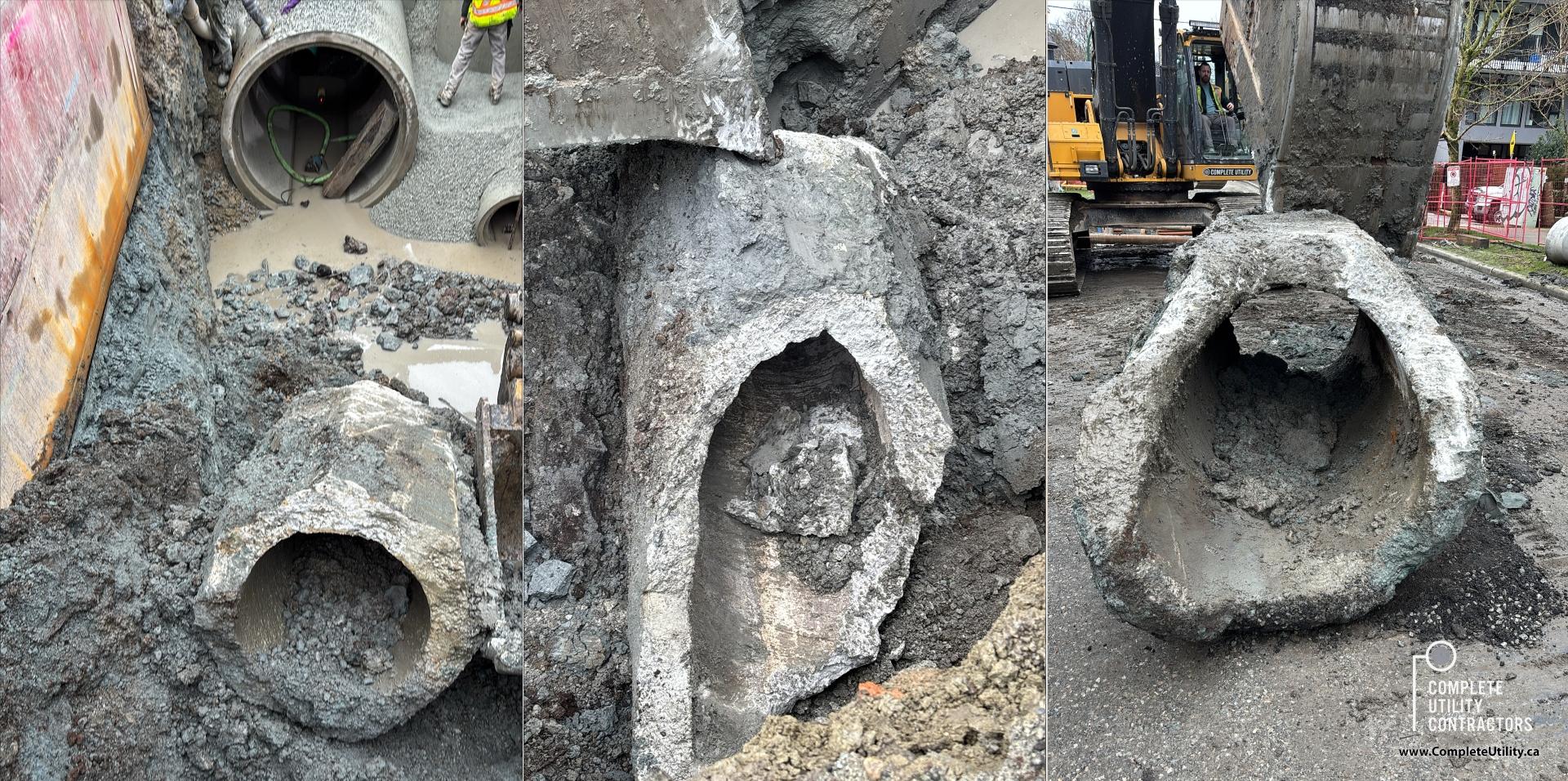
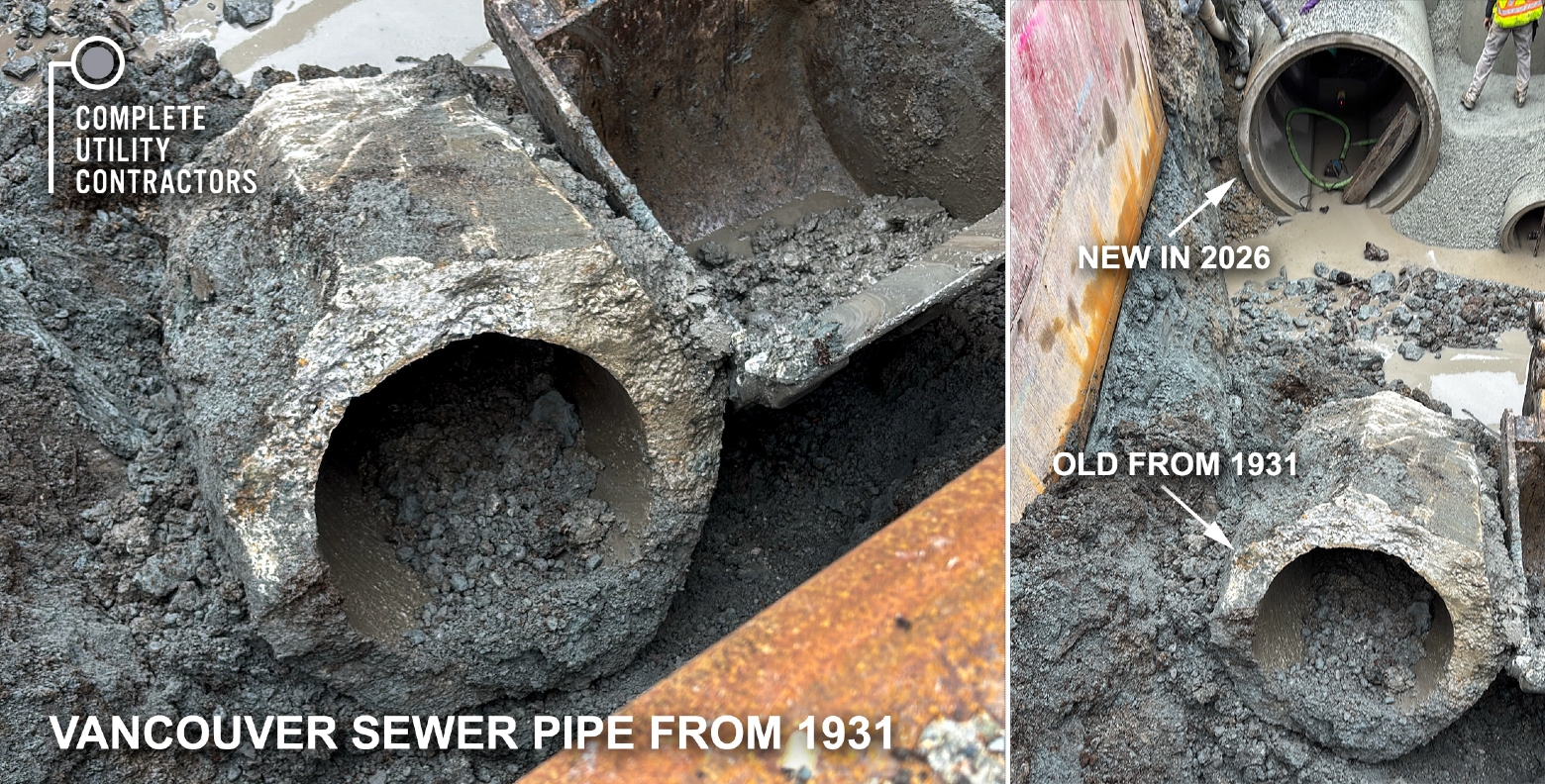
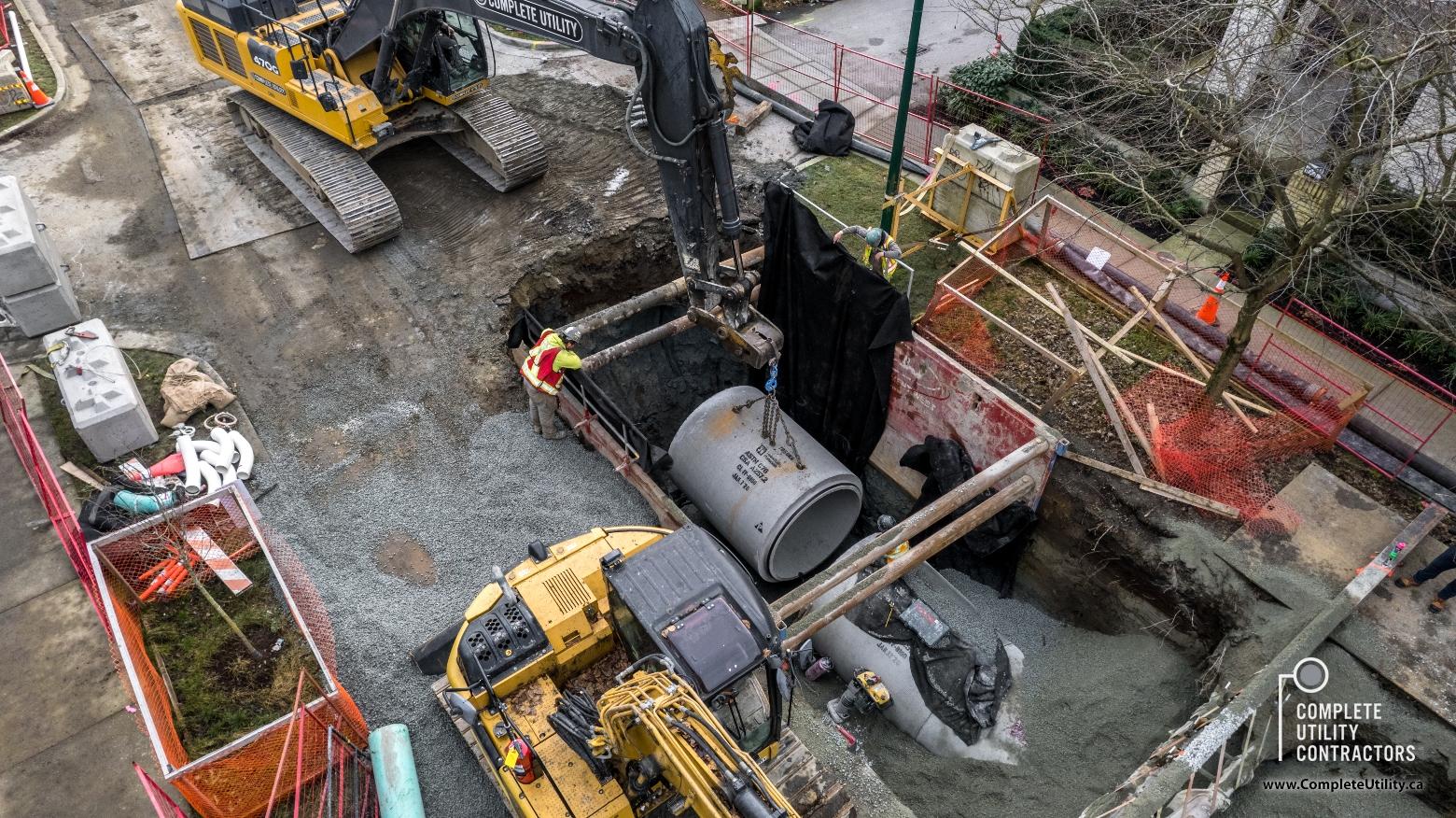
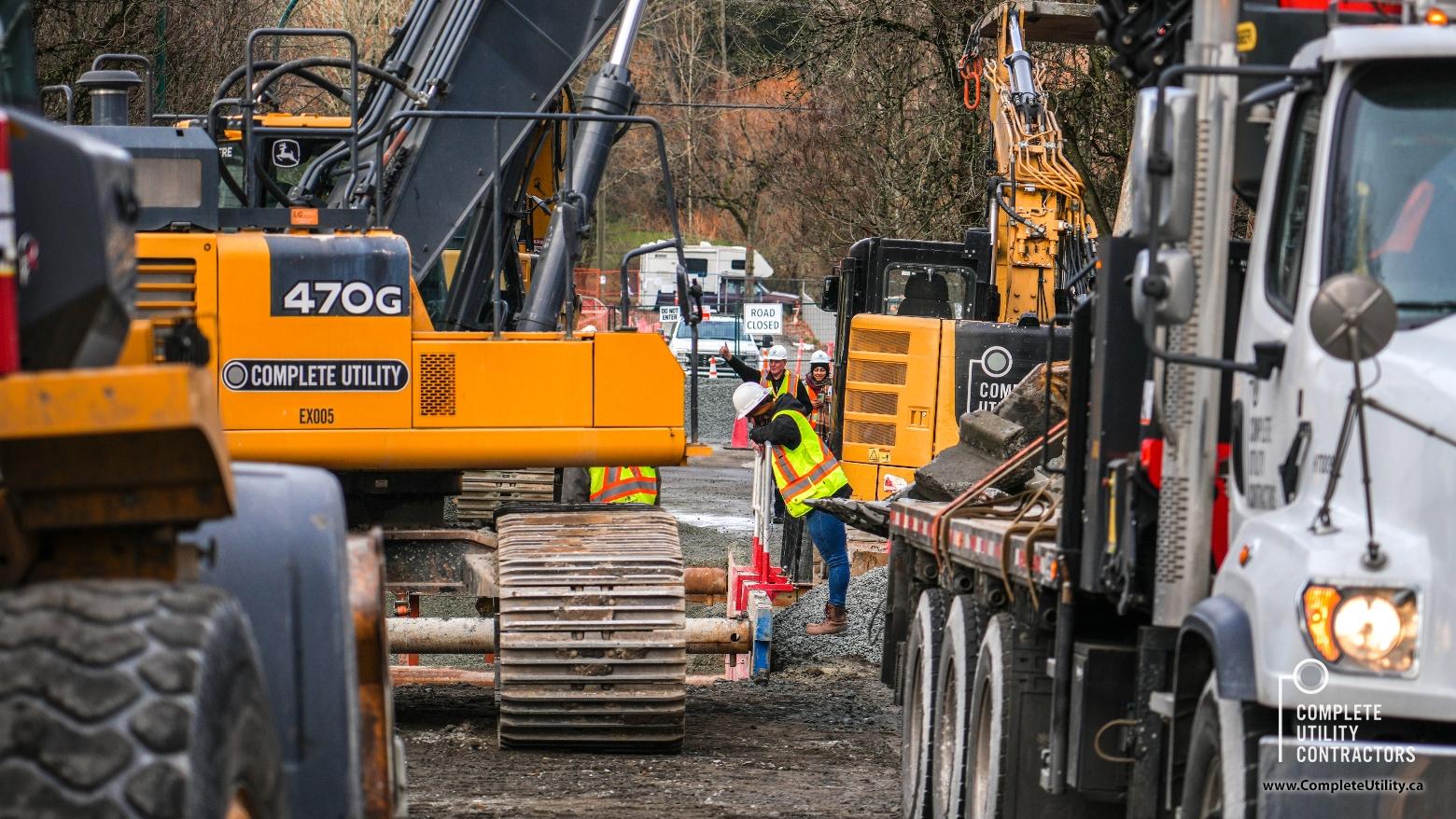
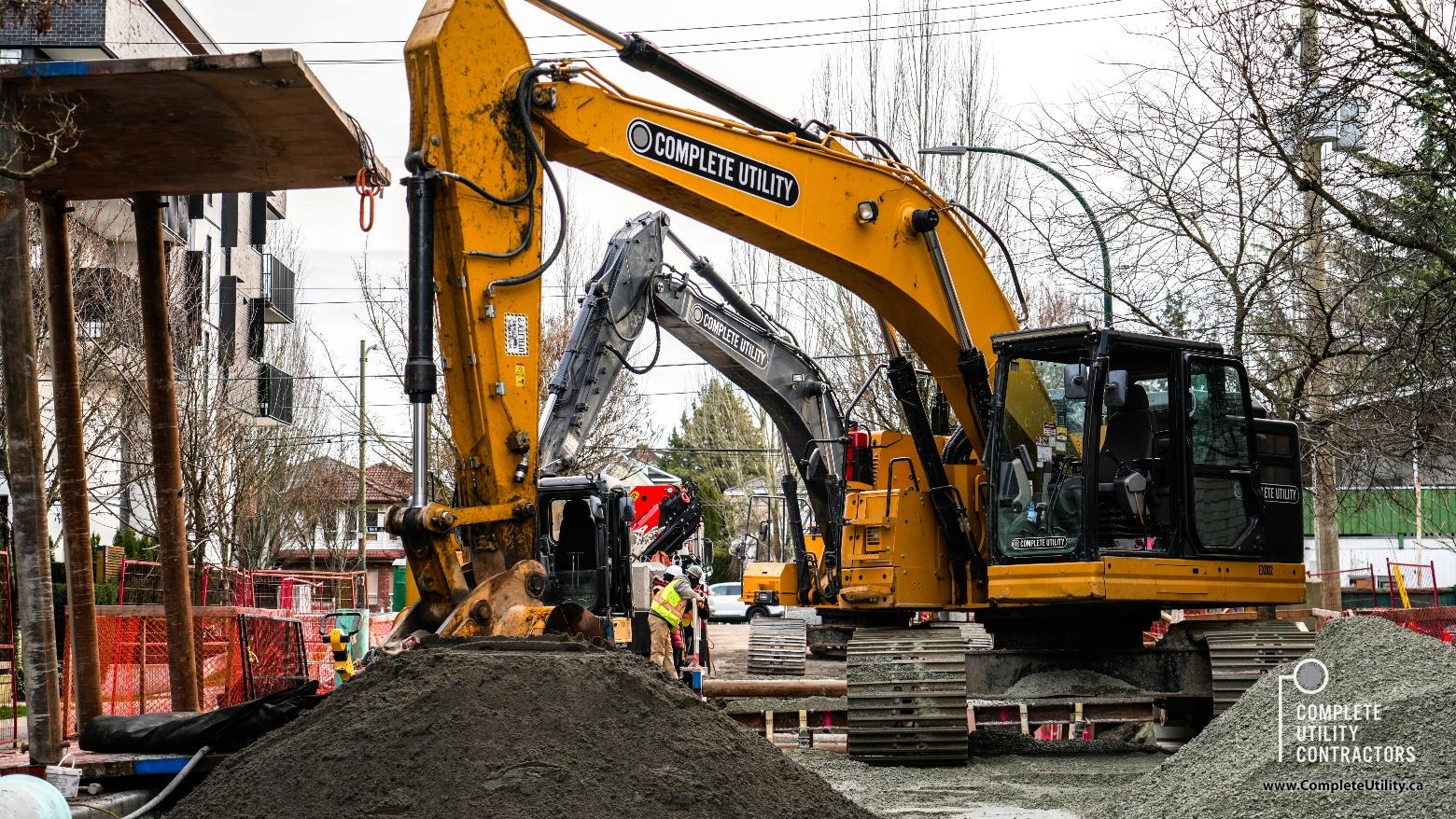
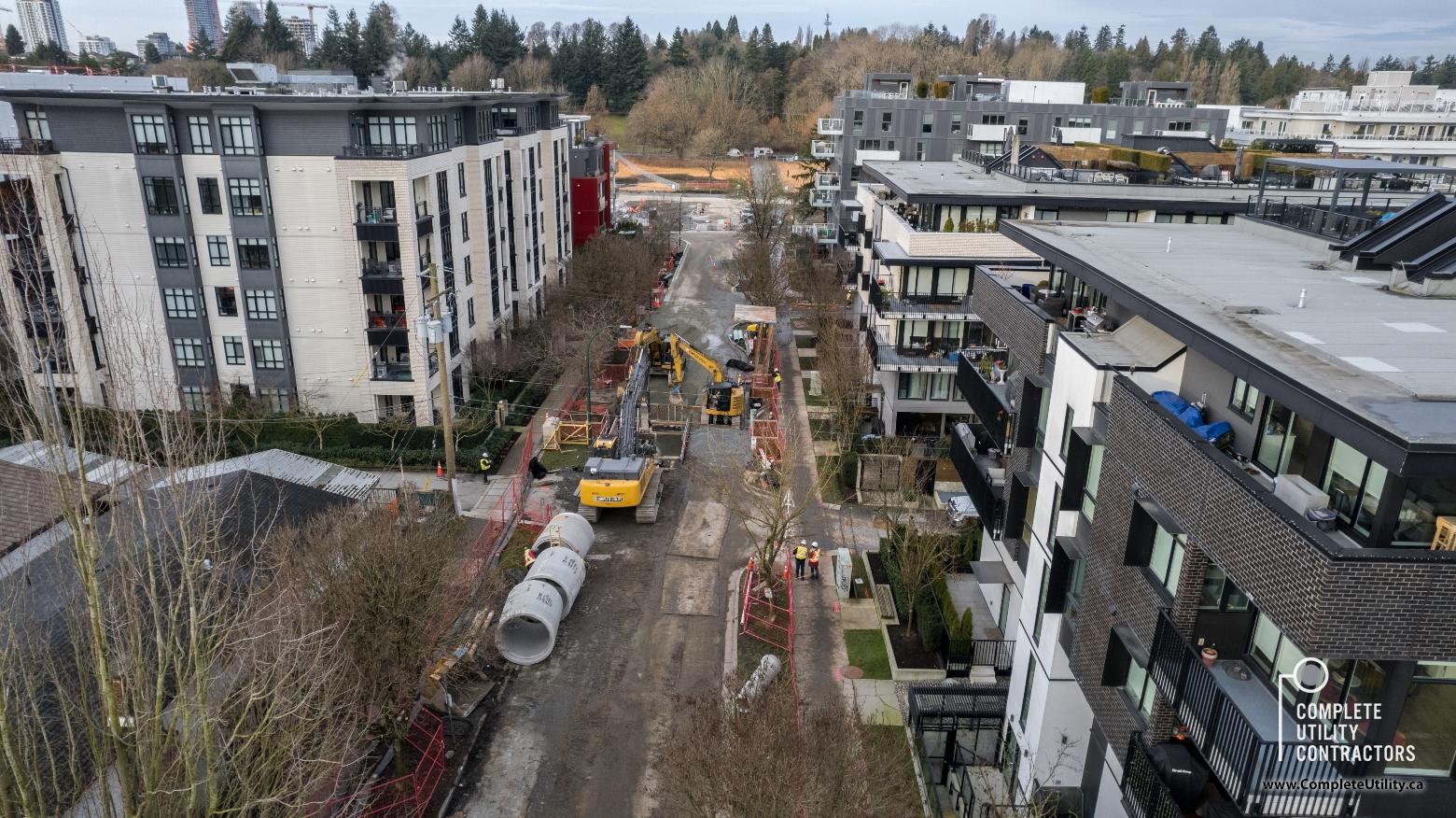
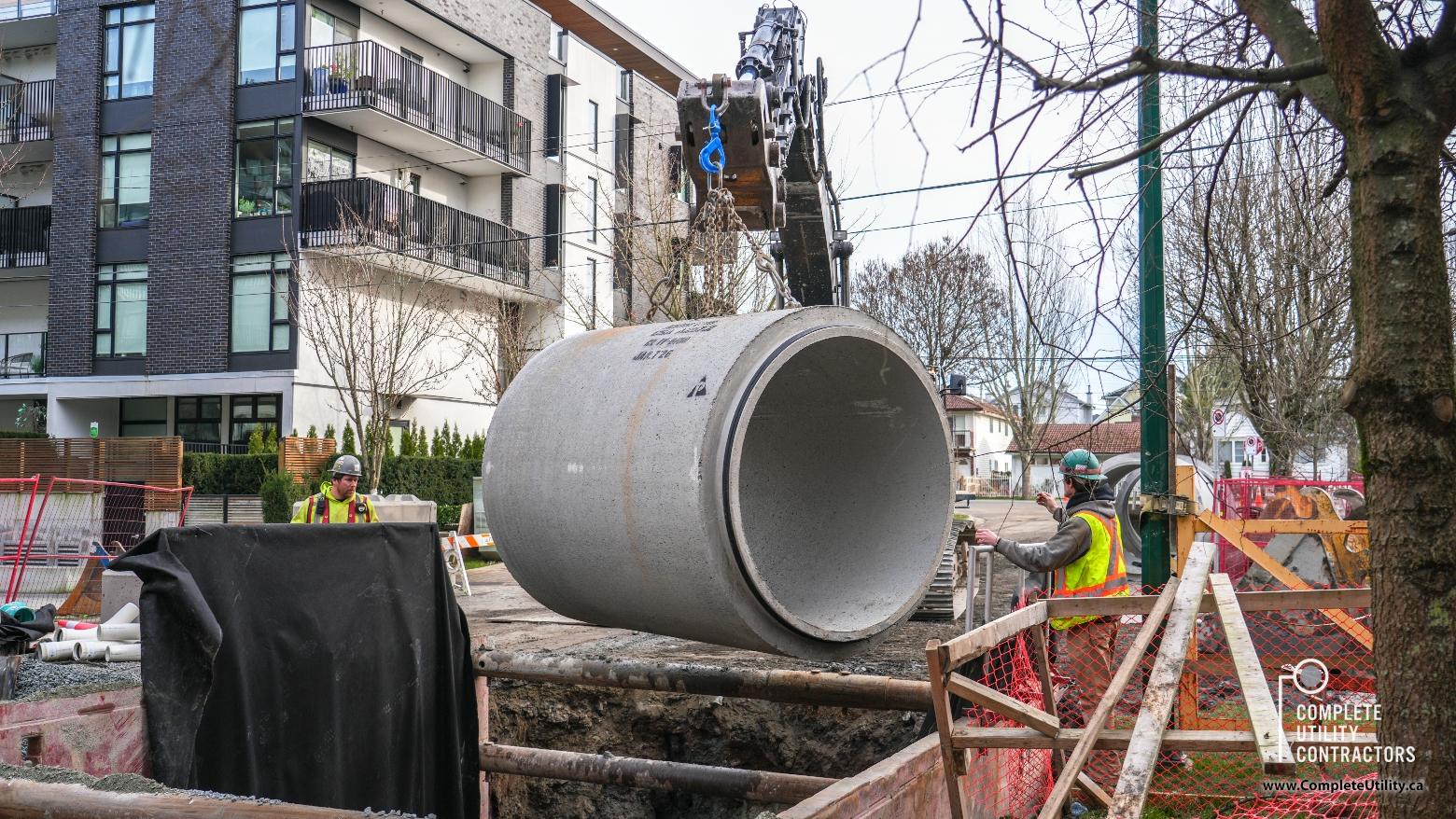
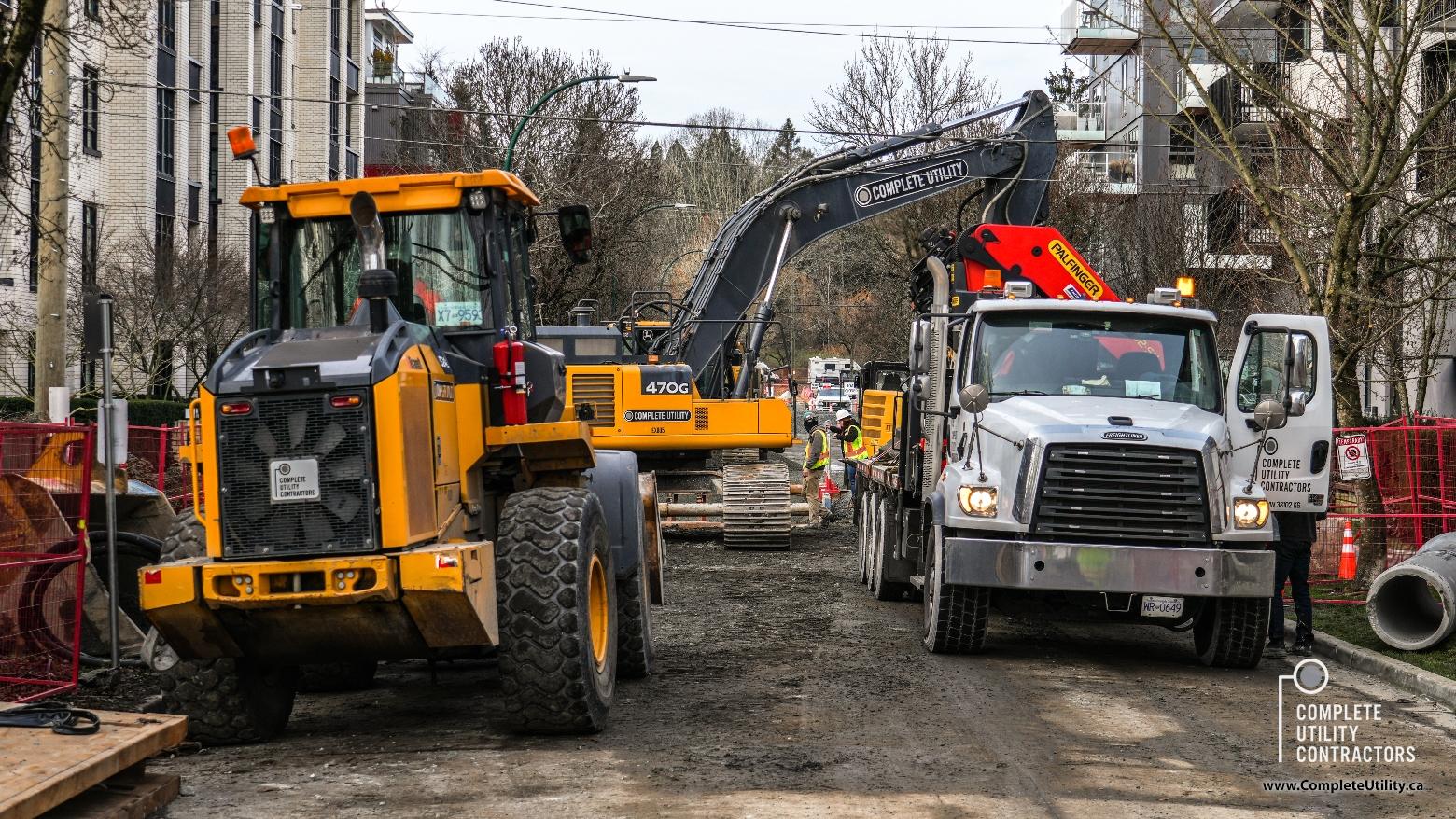
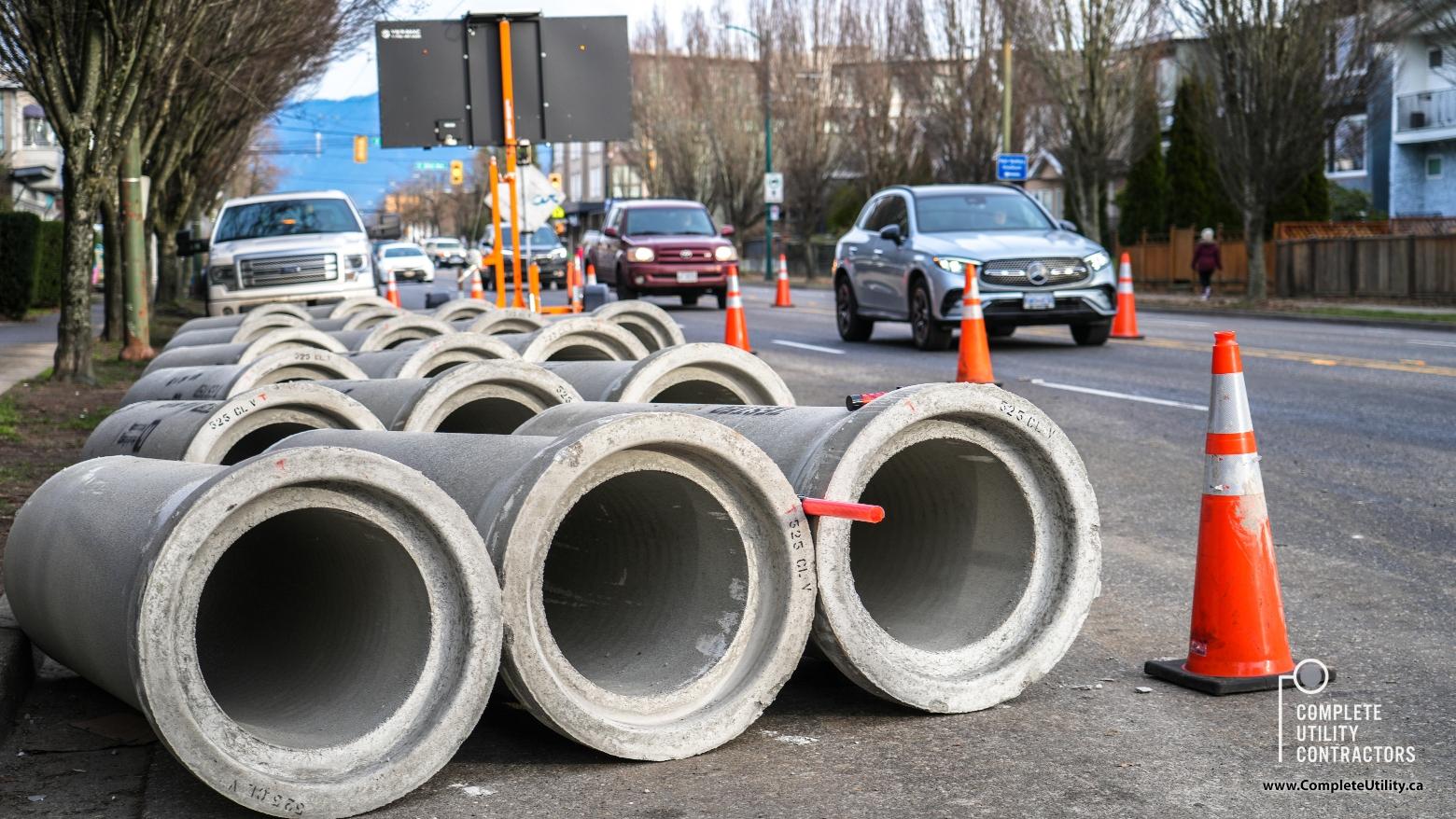
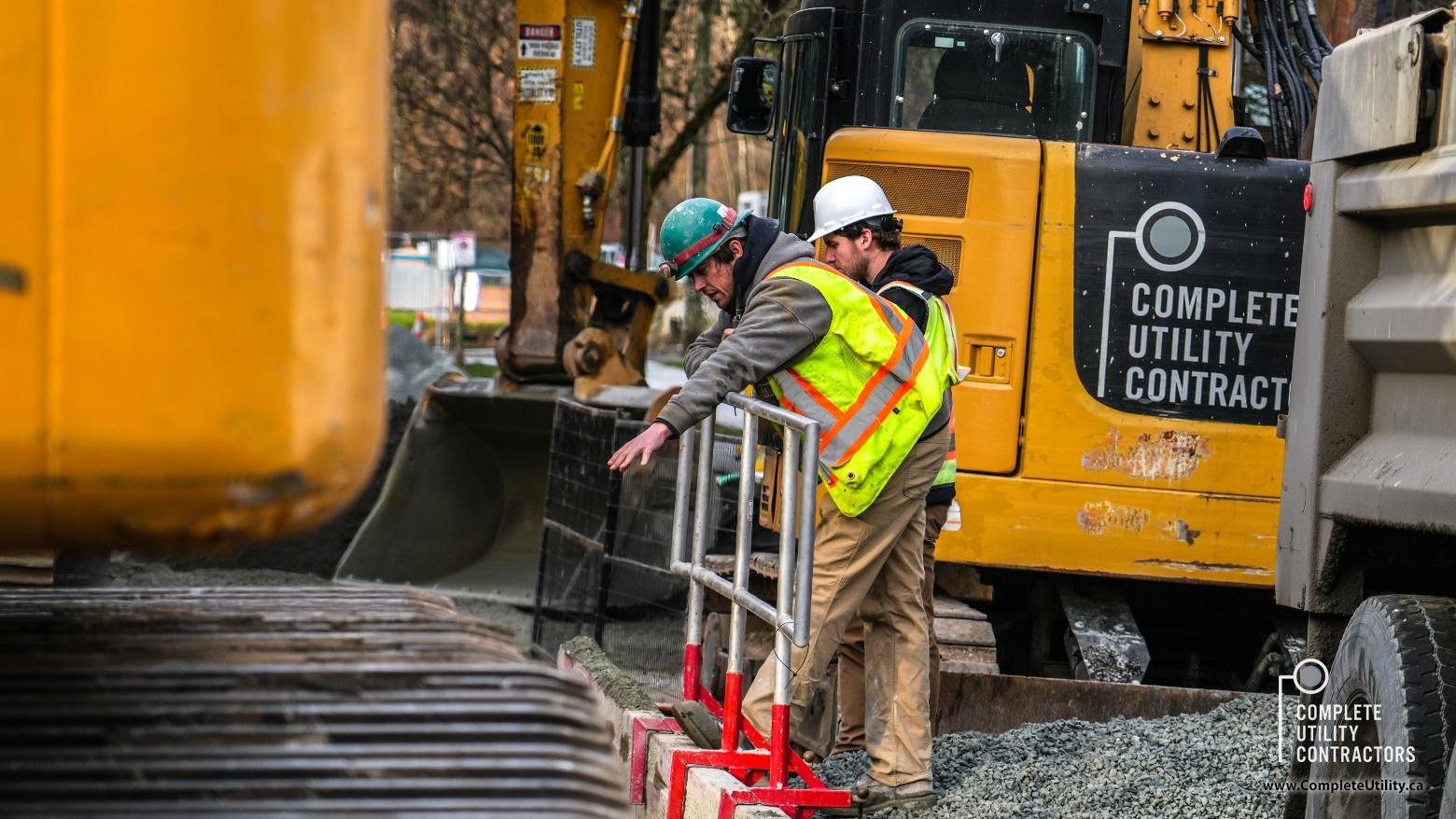
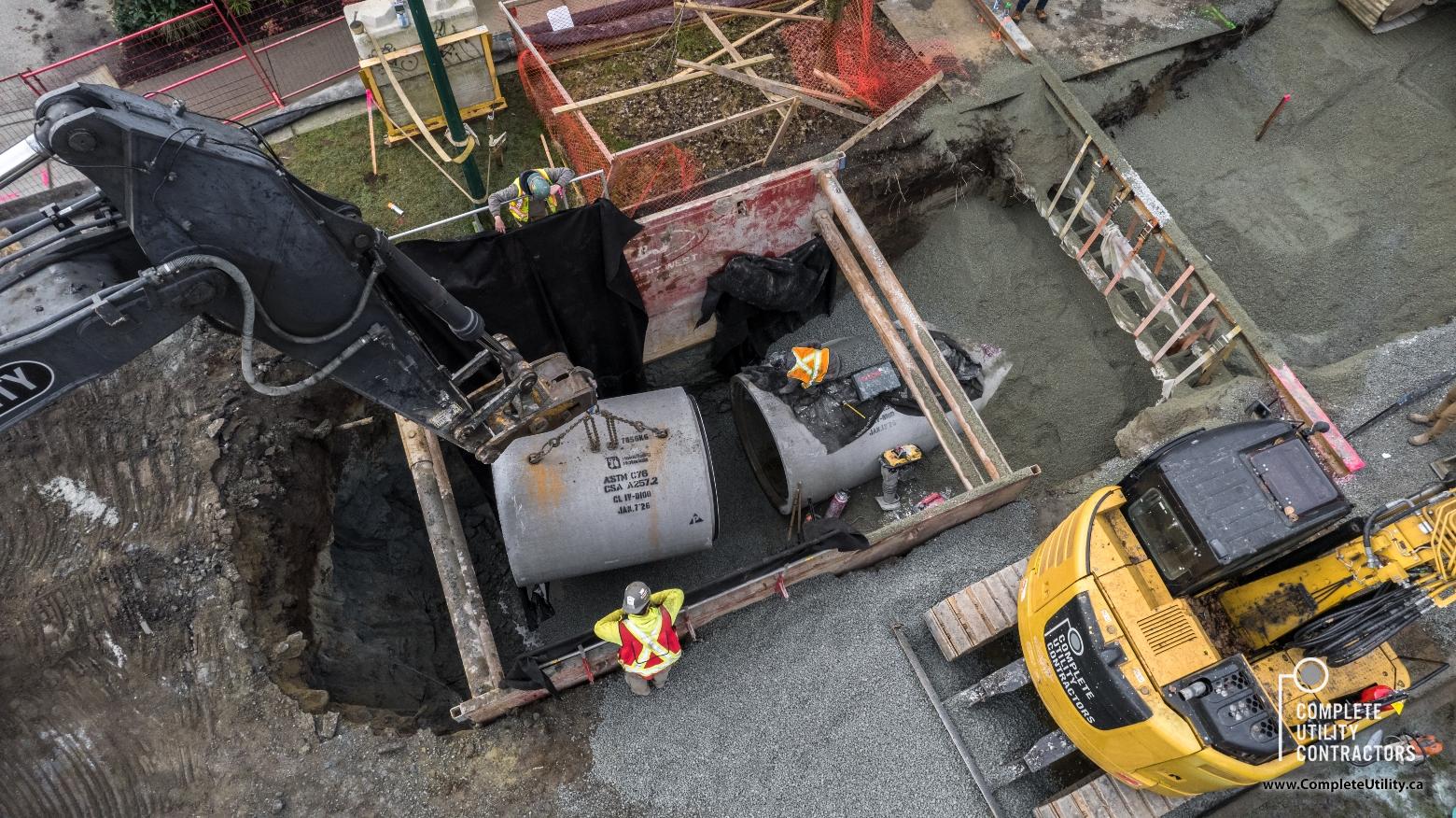
After digging hundreds of kilometres of trenches across the Lower Mainland, we thought we'd seen just about everything underground. Turns out, we were wrong. Buried beneath East 35th Avenue between Main Street and Quebec Street is a sewer line that's still impressively solid - but no longer suited for the demands of a modern, growing city.
And here's the real twist: these pipes aren't being replaced because they completely failed. They're being replaced because Vancouver evolved around them - and because time, as tough as these pipes are, still finds its weak spots.
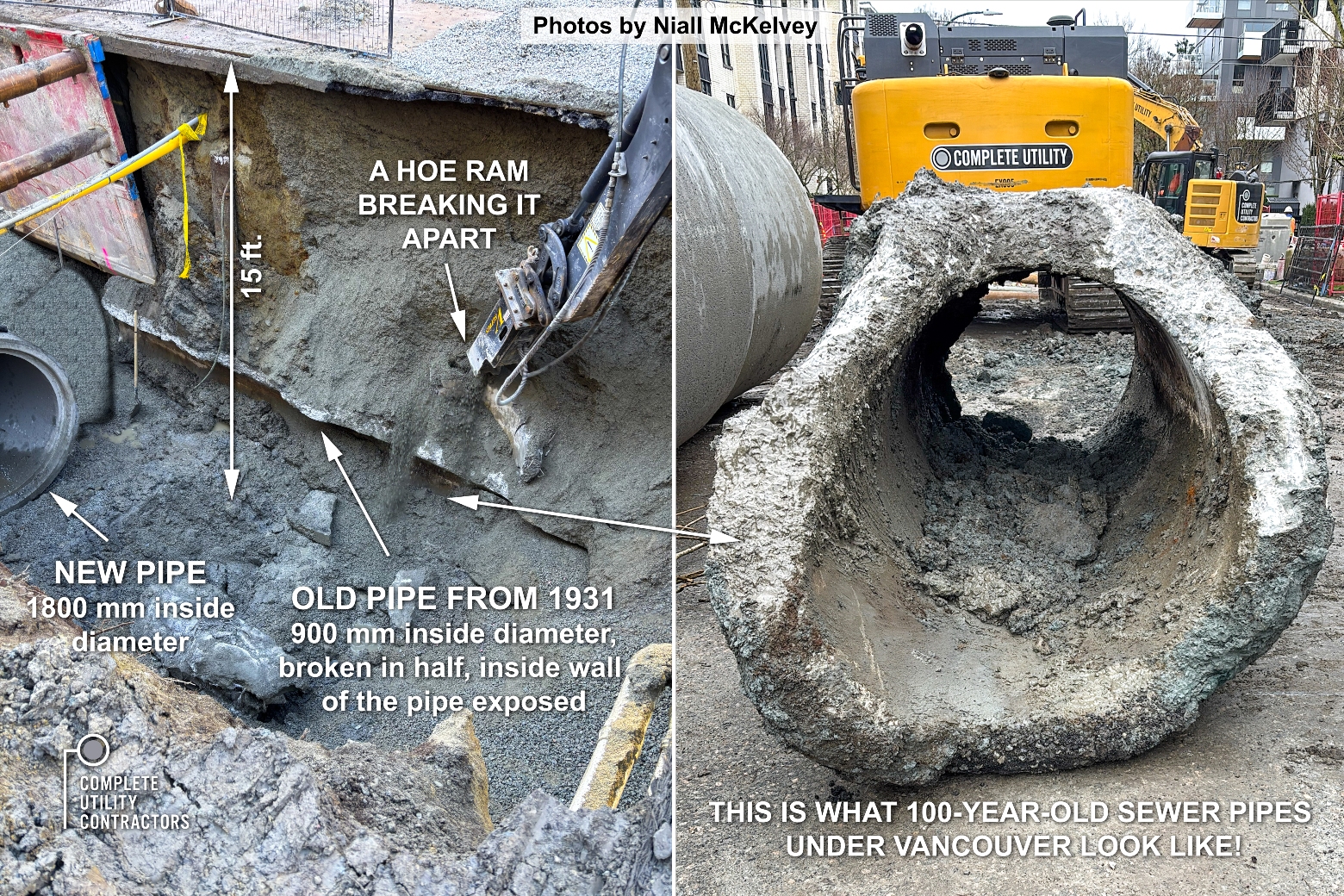
Despite being nearly 100 years old - and having no rebar at all - the pipes are unbelievably tough. Mono-poured directly in the trench with no bell-and-spigot joints, they form a continuous, rock-solid structure that has survived decades of ground movement, traffic loads, and West Coast weather. The downside? Breaking them into dump-truck-sized pieces is a full-on workout.
"The machine equipped with hoe ram concrete breaker attachment is carving and trying to smash them up almost all day," says project foreman Niall McKelvey with a chuckle. "It's amazing how tough it is for being so old."
That said, while structurally impressive overall, the system does show its age. Various failure points have developed over time, and the sewer lacks the capacity, access points, and modern design features required to support today's vibrant urban infrastructure - especially during peak flows and heavy rainfall events. In short, it's still standing strong, but it was built for a much quieter Vancouver.
Adding to the intrigue, historical records show the original sewer was hexagonal in shape - despite early drawings illustrating it as octagonal. Drafting error? Design evolution? Underground mystery? Either way, it's a rare glimpse into the city's early engineering choices.
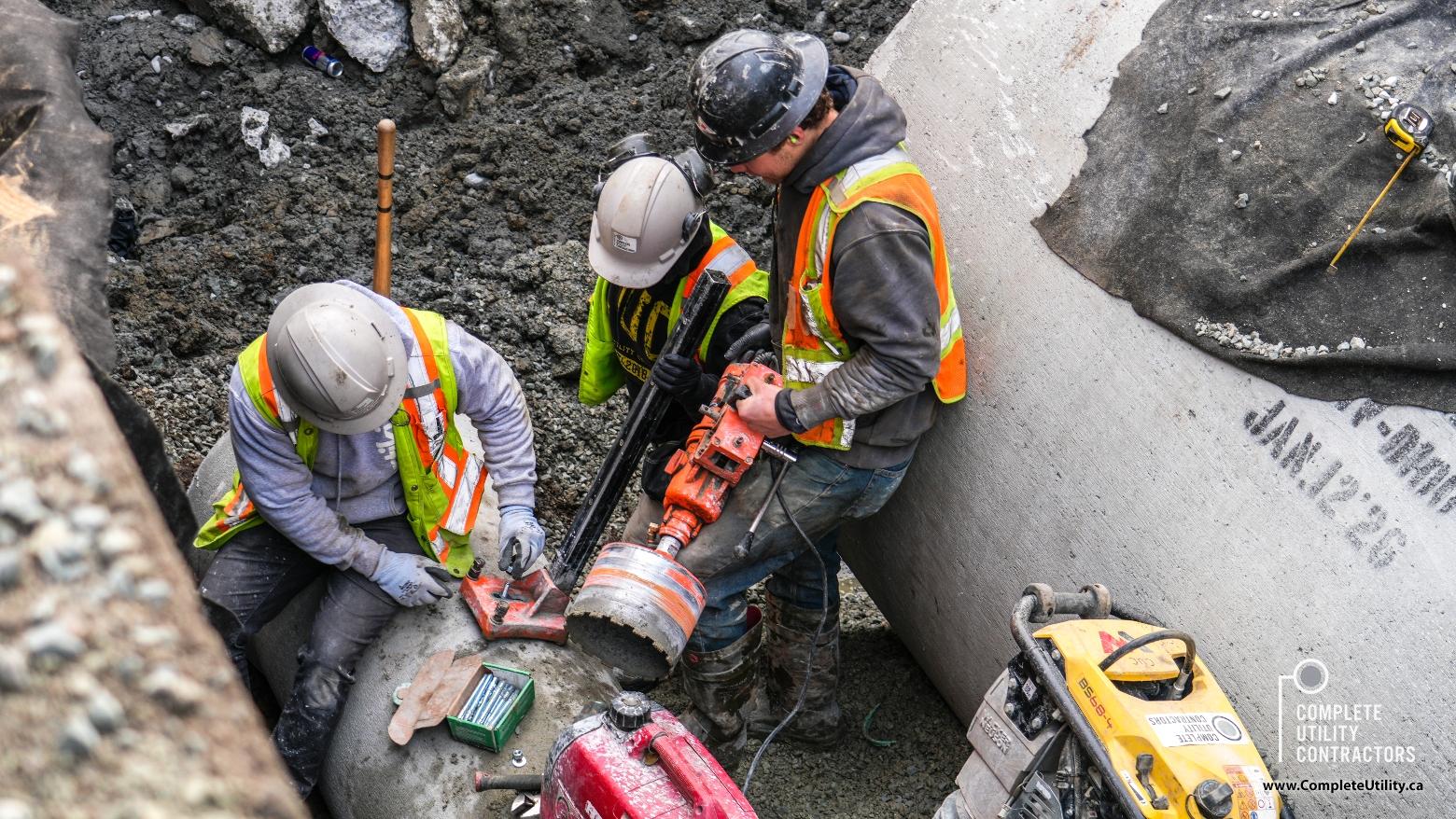
The six-month project is being completed in an active urban environment and requires careful coordination, traffic management, and a healthy respect for infrastructure that clearly didn't expect to be replaced while still putting up this much of a fight.
Because when you're upgrading a 100-year-old sewer that refuses to fail gracefully, you're not just building for the future - you're respectfully retiring a piece of Vancouver history that's earned it.
After all, when you’re working with 100-year-old pipes, you’re not just replacing infrastructure—you’re carefully closing a chapter of Vancouver’s hidden history.